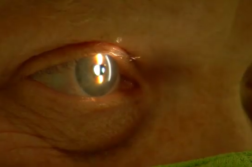
ANN ARBOR, Mich. (Ivanhoe Newswire)— Shingles is a painful complication caused by the same virus that causes chickenpox. If the rash spreads to the eye, it can reduce vision— or even lead to blindness. A new study indicates that in the most severe cases, there is a surgical solution that shows promise, corneal transplants.
They appear as painful, pus-filled blisters, usually on a person’s trunk, or shoulders.
“Shingles is basically the chickenpox virus that lives in one of our nerves in our body. It can come out down a nerve,” explained Christopher T. Hood, MD, clinical associate professor and medical director of the Cornea and Refractive Surgery Clinic, W. K. Kellogg Eye Center at Michigan Medicine Ophthalmology.
Sometimes shingles move across the face— infecting the eyes.
Doctors can prescribe anti-viral medications or eyedrops, but sometimes those don’t prevent scar tissue from forming. That’s when transplant becomes an option.
“And in that case, we can basically do, typically, a full-thickness cornea transplant, so-called penetrating keratoplasty, to remove basically, a round area of their cornea. Typically, about eight millimeters and then we use a donor persons cornea, someone who’s died and donates their eye, and we can then transplant that into position,” Dr. Hood elaborated.
Dr. Hood and his colleagues at the Kellogg Eye Center studied 53 patients who had the corneal transplants and found 94 percent of the grafts were intact one year after surgery, and patients’ vision improved significantly. There are options available now to help older adults avoid shingles. Doctors recommend adults get vaccinated, usually at about age 50.
Contributors to this news report include: Cyndy McGrath, Executive Producer & Field Producer; kirk Manson, Videographer; Roque Correa, Editor.
To receive a free weekly e-mail on Medical Breakthroughs from Ivanhoe, sign up at: http://www.ivanhoe.com/ftk
MEDICAL BREAKTHROUGHS
RESEARCH SUMMARY
TOPIC: CORNEAL TRANSPLANTS REVERSE SHINGLES-RELATED VISION LOSS
REPORT: MB #4769
BACKGROUND: Shingles, or Herpes Zoster, is a viral infection of the legs, torso, or eye that is similar to the chickenpox virus in many ways. Ophthalmic shingles is one of the most common presentations of the shingles virus and can have serious side effects that could permanently affect vision. The virus comes from within, it lies dormant inside the body until it is aggravated by stress or weakening of the immune system. It can travel along the nerve pathways and find its way to the nerve in and around the eye. This prolonged acute inflammation can cause serious scarring to the cornea that can affect the quality of vision as well as cause pain. Some people are at higher risk than other for contracting the virus. People with defiecent immune systems such as patients of leukemia, lymphoma, and HIV or people who receive drugs that cause their immune systems not to work properly such as steroids. Symptoms shingles patients may experience are itching, fever, headache, chills, and upset stomach.
(Sources: Christopher Hood, MD, Assistant Clinical Professor in Ophthalmology at the Kellogg Eye Center https://newsnetwork.mayoclinic.org/discussion/mayo-clinic-minute-what-are-eye-shingles/, https://www.cdc.gov/shingles/about/index.html)
VACCINATION: There are currently two vaccines on the market for this disease. One is older and called Zostavax and the other is a newer one called Shingrix. The difference in response and efficacy is debatable amongst consumers and doctors, but the main issue is that many are not getting vaccinated at all. This is a virus that can reoccur in the body several times as the virus lies dormant within. Experts say a vaccine could greatly reduce or prevent an episode of acute inflammation and scarring from occurring. The FDA and Federal Advisory Committee on Immunization Practices have stated that Shingrix should be used preferentially due to the high effectiveness in clinical research and should be received even if the patient has already received the Zostavax vaccine. They also suggest that every American over 50 or immunocompetent should receive the vaccine.
(Sources: Christopher Hood, MD, Assistant Clinical Professor in Ophthalmology at the Kellogg Eye Center, https://www.aao.org/eyenet/article/new-shingles-vaccine-approved)
CORNEAL TRANSPLANTATION: Cornea transplants are becoming a more common medical treatment.. The transplant occurs after the inflammation in the eye is stopped and scar tissue remains. Patients who suffer from shingles will often have scarring in the middle portion of the cornea or the stroma. In this case, Ophthalmic surgeons can perform what is called penetrating keratoplasty. This is done to remove the scarring from around the area of their cornea. Recovery is slow with most patients reporting gradual improvement of vison over the first few months and then full recovery of anywhere up to a year after, depending on the individual patient. The surgery can vastly improve vision impaired by scarring as well as relieve pain over time.
(Sources: Christopher Hood, MD, Assistant Clinical Professor in Ophthalmology at the Kellogg Eye Center)
FOR MORE INFORMATION ON THIS REPORT, PLEASE CONTACT:
SHANTELL KIRKENDOLL
UMICH MEDIA RELATIONS
(734) 764-2220
If this story or any other Ivanhoe story has impacted your life or prompted you or someone you know to seek or change treatments, please let us know by contacting Marjorie Bekaert Thomas at mthomas@ivanhoe.com