Why drinking more water didn’t prevent kidney stones-Click HereNew treatment cuts bad cholesterol by nearly 50% without statins-Click HereScientists reveal the best exercise for knee arthritis pain relief-Click HereScientists restore memory by blocking a single Alzheimer’s protein-Click HereMIT study finds children more vulnerable to cancer-causing chemical in water-Click HereA forgotten drug is giving new hope to kids with a rare disease-Click HereVitamin D boosts breast cancer treatment success by 79%-Click HereYour dreams aren’t random. Here’s what’s really happening-Click HerePesticide exposure linked to 150% higher cancer risk in major study-Click HereScientists may have found the brain’s switch for chronic pain-Click HereSports concussions increase injury risk-Click HereUncovering a cellular process that leads to inflammation-Click HereNew study links contraceptive pills and depression-Click HereA short snout predisposes dogs to sleep apnea-Click HereBuilding a new vaccine arsenal to eradicate polio-Click HereThe Viking disease can be due to gene variants inherited from Neanderthals-Click HereQatar Omicron-wave study shows slow decline of natural immunity, rapid decline of vaccine immunity-Click HereMore than a quarter of people with asthma still over-using rescue inhalers, putting them at increased risk of severe attacks-Click hereProgress on early detection of Alzheimer’s disease-Click HereDried samples of saliva and fingertip blood are useful in monitoring responses to coronavirus vaccines-Click HereDietary fiber in the gut may help with skin allergies-Click HereResearchers discover mechanism linking mutations in the ‘dark matter’ of the genome to cancer-Click HereDespite dire warnings, monarch butterfly numbers are solid-Click HereImmunotherapy may get a boost-Click HereArtificial intelligence reveals a never-before described 3D structure in rotavirus spike protein-Click HereRecurring brain tumors shaped by genetic evolution and microenvironment-Click HereCompound shows promise for minimizing erratic movements in Parkinson’s patients-Click HereConsuming fruit and vegetables and exercising can make you happier-Click HereCOVID-19 slows birth rate in US, Europe-Click HereLink between ADHD and dementia across generations-Click HerePreventing the long-term effects of traumatic brain injury-Click HereStudy details robust T-cell response to mRNA COVID-19 vaccines — a more durable source of protection-Click HereArtificial color-changing material that mimics chameleon skin can detect seafood freshness-Click HereNeural implant monitors multiple brain areas at once, provides new neuroscience insights-Click HereB cell activating factor possible key to hemophilia immune tolerance-Click HereMasks not enough to stop COVID-19’s spread without distancing, study finds-Click HereAI can detect COVID-19 in the lungs like a virtual physician, new study shows-Click HerePhase 1 human trials suggest breast cancer drug is safe, effective-Click HereRe-engineered enzyme could help reverse damage from spinal cord injury and stroke-Click HereWeight between young adulthood and midlife linked to early mortality-Click HereIncreased fertility for women with Neanderthal gene, study suggests-Click HereCoronavirus testing kits to be developed using RNA imaging technology-Click HereFacial expressions don’t tell the whole story of emotion-Click HereAcid reflux drug is a surprising candidate to curb preterm birth-Click HereTreating Gulf War Illness With FDA-Approved Antiviral Drugs-Click HereHeart patch could limit muscle damage in heart attack aftermath-Click HereA nap a day keeps high blood pressure at bay-Click HereIn small groups, people follow high-performing leaders-Click HereTick tock: Commitment readiness predicts relationship success-Click HereA comprehensive ‘parts list’ of the brain built from its components, the cells-Click HereResearchers confine mature cells to turn them into stem cells-Click HereNew tissue-imaging technology could enable real-time diagnostics, map cancer progression-Click HereEverything big data claims to know about you could be wrong-Click HerePsychedelic drugs promote neural plasticity in rats and flies-Click HereEducation linked to higher risk of short-sightedness-Click HereNew 3D printer can create complex biological tissues-Click HereThe creative brain is wired differently-Click HereWomen survive crises better than men-Click HerePrecise DNA editing made easy: New enzyme to rewrite the genome-Click HereFirst Time-Lapse Footage of Cell Activity During Limb RegenerationStudy Suggests Approach to Waking Patients After Surgery

Patient Turned Scientist: From Diagnosis to Discovery

0

RALEIGH, NC. (Ivanhoe Newswire) — More than 700,000 Americans are living with a brain tumor and treating them is one of medicine’s biggest challenges. Every tumor is different, and doctors often don’t know which drug will work best. Now, a brain cancer survivor is working to change that, not just for himself, but for every patient who comes next.

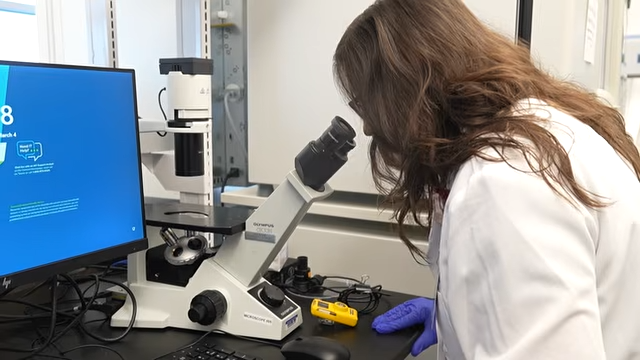
This lab is exactly where Andrew Satterlee, PhD, is supposed to be.

“My cancer shaped my whole life. It shaped my whole career direction. It shaped how I think about life and the important things in life,” Andrew told Ivanhoe.

When Andrew was a 20-year-old engineering student, his world was turned upside down.

“I’m a brain cancer survivor. When I was 20 years old, I got hydrocephalus,” he said.

Doctors removed a mass the size of a ping pong ball, but after surgery, he faced a frightening reality.

“The doctors didn’t know what drugs to give me. They didn’t agree on what drugs to give me,” Andrew recalled.

Andrew and his family made the best decision they could, but never knew if it was the right one. Now, that experience is driving his life’s work as an assistant professor and director of the Screening Live Cancer Explants (SLiCE) program at Eshelman Innovation at UNC.

“Now 18 years later, I’m here in a lab that gets to work on this tool that I could have used as a patient,” Andrew told Ivanhoe.

Now he is helping develop the “Brain SLiCE” platform. Instead of guessing which drug might work, scientists can test medicines directly on a patient’s living tumor by placing a tumor sample onto living tissue outside the body and exposing it to different therapies.

“It can respond in ways that it doesn’t respond when you try to grow it up in a plastic dish,” Andrew explained.

Allowing doctors to see what works and what doesn’t.

“In just four days, we can know if the tumor lived or died during treatment,” Andrew said.

The goal?

“It’s meant to be personalized to every specific patient and their own tumor,” Andrew told Ivanhoe.

For him, this breakthrough isn’t just science. It’s personal.

Researchers say technology is still in development and must clear regulatory hurdles before it can guide everyday patient care. But they say brain cancer is just the beginning. The same approach could one day help doctors test treatments for other cancers, including tumors in the lungs and abdomen.

Contributors to this news report include: Marsha Lewis, Producer; Matt Goldschmidt, Videographer; & Chuck Bennethum, Editor.

Source:

https://braintumor.org/brain-tumors/about-brain-tumors/

* For More Information, Contact:             Andrew Satterlee, PhD

                                                                        Assistant Professor and Director of the Screening Live Cancer Explants (SLiCE) Program at Eshelman Innovation at UNC.

                                                                        satterle@email.unc.edu

                                                                        and

                                                                        Nancy Bostrom

                                                                        Manager of Research & National News at UNC Health and UNC School of Medicine

                                                                        nancy.bostrom@unchealth.unc.edu

Free weekly e-mail on Prescription: Health from Ivanhoe. To sign up: http://www.ivanhoe.com/ftk