RALEIGH, NC. (Ivanhoe Newswire) — Heart disease remains the leading cause of death in the United States, responsible for about one in every five deaths each year. And worldwide, cardiovascular disease claims nearly 18 million lives annually, more than any other condition. Now researchers are working on a new way to help hearts heal after a heart attack, not with surgery or stents, but with gene therapy designed to strengthen the heart from within.
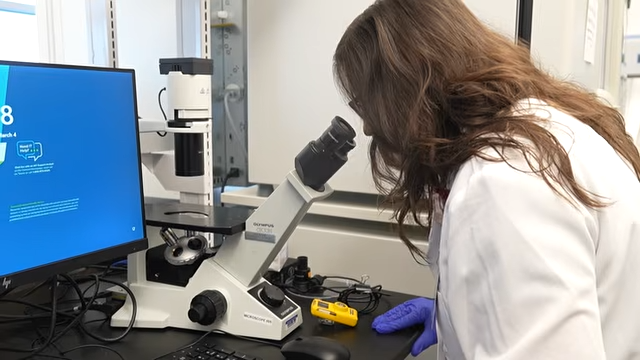
In a Duke University lab, a living human heart tissue is beating on its own outside of a body.
Here, biomedical engineer Nenad Bursac, PhD, is testing new ways to help hearts heal after a heart attack.
“Broken heart medically is actually a heart that underwent a heart attack, and it’s slowly deteriorating over time,” he told Ivanhoe.
After a heart attack, heart muscle tissue damage is permanent.
“Once they’re dead, they’re dead forever. And that’s irreversible,” explained Prof. Bursac.
So now, researchers in the Bursac Lab are developing a new gene therapy, not to regrow the heart, but to make the remaining muscle stronger and more efficient.
“It improves how the heart functions electrically, and the second thing it does … it actually improves how strong heart cells contract,” said Prof. Bursac.
They start with human heart cells that grow into heart tissue. This tissue is used to deliver genetic instructions that can help damaged heart cells beat stronger and remove dangerous heart rhythms.
“Through gene therapy work, we make the rest of the heart become stronger,” Prof. Bursac told Ivanhoe.
The therapy can be delivered through a catheter — no need for open heart surgery. And Prof. Bursac believes it will be a one-time treatment.
A new approach to a broken heart and a future where more hearts keep beating stronger and longer.
Researchers say what makes this approach different is that while stents can help keep blood vessels open, they don’t actually improve how strongly the heart muscle contracts. This new gene therapy is designed to do both. If future testing continues to show promise, human clinical trials could be next, one day helping millions living with heart damage avoid heart failure.
Contributors to this news report include: Marsha Lewis, Producer; Matt Goldschmidt, Videographer; & Roque Correa, Editor.
Sources:
https://www.cdc.gov/heart-disease/about/index.html
https://today.duke.edu/2025/12/how-heal-broken-heart
* For More Information, Contact: Nenad Bursac, PhD
Professor of Biomedical Engineering at Duke University
https://bursaclab.pratt.duke.edu/
and
Ken Kingery
Assistant Director of Communications & Media Relations at Duke Pratt School of Engineering
Free weekly e-mail on Prescription: Health from Ivanhoe. To sign up: http://www.ivanhoe.com/ftk