Nerve injuries can trigger hidden immune changes throughout the entire body-Click HereScientists find dark chocolate ingredient that slows aging-Click HereThis 15 minute hepatitis C test could change everything-Click HereGene-edited CAR-T cells erase aggressive T-cell leukemia-Click HereSimple supplement mix shows remarkable results in brain cancer-Click HereWhy ultra-processed foods make teens eat more when they aren’t hungry-Click HereSingle enzyme mutation reveals a hidden trigger in dementia-Click HereMost of the world isn’t getting enough omega-3-Click HereThis simple ingredient makes kale way healthier-Click HereNew study finds a silent genetic heart risk hidden in millions-Click HereSports concussions increase injury risk-Click HereUncovering a cellular process that leads to inflammation-Click HereNew study links contraceptive pills and depression-Click HereA short snout predisposes dogs to sleep apnea-Click HereBuilding a new vaccine arsenal to eradicate polio-Click HereThe Viking disease can be due to gene variants inherited from Neanderthals-Click HereQatar Omicron-wave study shows slow decline of natural immunity, rapid decline of vaccine immunity-Click HereMore than a quarter of people with asthma still over-using rescue inhalers, putting them at increased risk of severe attacks-Click hereProgress on early detection of Alzheimer’s disease-Click HereDried samples of saliva and fingertip blood are useful in monitoring responses to coronavirus vaccines-Click HereDietary fiber in the gut may help with skin allergies-Click HereResearchers discover mechanism linking mutations in the ‘dark matter’ of the genome to cancer-Click HereDespite dire warnings, monarch butterfly numbers are solid-Click HereImmunotherapy may get a boost-Click HereArtificial intelligence reveals a never-before described 3D structure in rotavirus spike protein-Click HereRecurring brain tumors shaped by genetic evolution and microenvironment-Click HereCompound shows promise for minimizing erratic movements in Parkinson’s patients-Click HereConsuming fruit and vegetables and exercising can make you happier-Click HereCOVID-19 slows birth rate in US, Europe-Click HereLink between ADHD and dementia across generations-Click HerePreventing the long-term effects of traumatic brain injury-Click HereStudy details robust T-cell response to mRNA COVID-19 vaccines — a more durable source of protection-Click HereArtificial color-changing material that mimics chameleon skin can detect seafood freshness-Click HereNeural implant monitors multiple brain areas at once, provides new neuroscience insights-Click HereB cell activating factor possible key to hemophilia immune tolerance-Click HereMasks not enough to stop COVID-19’s spread without distancing, study finds-Click HereAI can detect COVID-19 in the lungs like a virtual physician, new study shows-Click HerePhase 1 human trials suggest breast cancer drug is safe, effective-Click HereRe-engineered enzyme could help reverse damage from spinal cord injury and stroke-Click HereWeight between young adulthood and midlife linked to early mortality-Click HereIncreased fertility for women with Neanderthal gene, study suggests-Click HereCoronavirus testing kits to be developed using RNA imaging technology-Click HereFacial expressions don’t tell the whole story of emotion-Click HereAcid reflux drug is a surprising candidate to curb preterm birth-Click HereTreating Gulf War Illness With FDA-Approved Antiviral Drugs-Click HereHeart patch could limit muscle damage in heart attack aftermath-Click HereA nap a day keeps high blood pressure at bay-Click HereIn small groups, people follow high-performing leaders-Click HereTick tock: Commitment readiness predicts relationship success-Click HereA comprehensive ‘parts list’ of the brain built from its components, the cells-Click HereResearchers confine mature cells to turn them into stem cells-Click HereNew tissue-imaging technology could enable real-time diagnostics, map cancer progression-Click HereEverything big data claims to know about you could be wrong-Click HerePsychedelic drugs promote neural plasticity in rats and flies-Click HereEducation linked to higher risk of short-sightedness-Click HereNew 3D printer can create complex biological tissues-Click HereThe creative brain is wired differently-Click HereWomen survive crises better than men-Click HerePrecise DNA editing made easy: New enzyme to rewrite the genome-Click HereFirst Time-Lapse Footage of Cell Activity During Limb RegenerationStudy Suggests Approach to Waking Patients After Surgery

Detecting NEC Quickly Saves Preemies

0

NEW ORLEANS, La. (Ivanhoe Newswire) – There are almost 400,000 babies born prematurely each year in the United States – that’s one in 10 babies born before 37 weeks of pregnancy. The smaller they are, the more medical problems they can have, including one very dangerous complication. It is the second leading cause of death in preemie babies. Up to 40 percent of babies who get it will die from it. There is no test to detect it, that is, until now. Researchers are on the verge of a breakthrough that could end up saving the tiniest of babies.

Two-year-old David Branch III has come a long way! He was born at 23 weeks, weighing just one pound.

“I got to see him for a minute and off he went, straight to the NICU,” his mother, Kimberly Sterling recalls.

Not long after birth, something happened.

“Overnight, his stomach expanded. Imagine this one-pounder with a belly that looks like he swallowed a tangerine,” Kimberly adds.

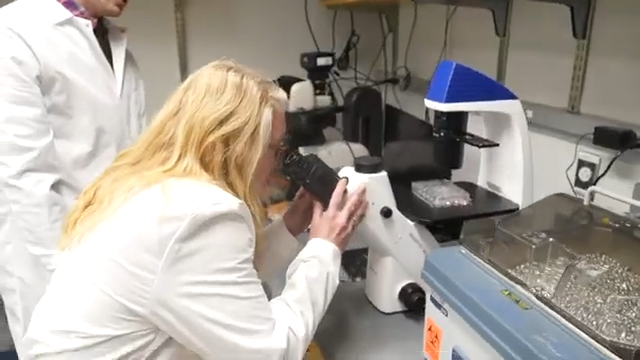
An extended belly and blood in the baby’s stool are the most common signs of NEC, or necrotizing enterocolitis. Now, Professor of Genetics & Biochemistry at LSU Health New Orleans School of Medicine, Sunyoung Kim, PhD and her team have created “NECDetect.”

(Read Full Interview)

Kim says, “This test is really individualized for each infant in determining what’s happening with their gut.”

The best part – it’s non-invasive.

“We’re looking at the poop in their diaper. And so, that’s a direct read out of what’s happening in their gut,” Kim adds.

NECDetect’s goal is to prevent surgeries, like the one little Liani Marrero had when she was just five days old.

Her mother, Fabiola Marrero tells Ivanhoe, “The surgeon told me that he didn’t know if the intestines that he had left were viable or not.”

Thankfully, they did find healthy tissue, and now, three months later, little Liani is doing well.

NECDetect has been granted a breakthrough device designation by the FDA. Certainly a game changer for David, now two and fully recovered.

If NEC is not treated quickly, the lack of nutrients from not eating can cause growth problems, as well as neurodevelopment and behavioral problems. Kim believes that every preemie will one day be tested for NEC after birth. She believes if NEC is caught early enough, they could lower the complications by half, striving to avoid surgery and cut down on a lot of the long-term complications that come with it. Kim was granted a U.S. patent for her discovery, and now patent applications are pending in Canada, Europe, Hong Kong, Australia, New Zealand, and China, proving this could be a worldwide game changer when it comes to saving preemies with NEC.

Contributors to this news report include: Marsha Lewis, Producer; Matt Goldschmidt, Videographer; Roque Correa, Editor.

To receive a free weekly e-mail on medical breakthroughs from Ivanhoe, sign up at: http://www.ivanhoe.com/ftk

Source:

https://www.marchofdimes.org/peristats/reports/united-states/prematurity-profile#:~:text=In%202021,%20there%20were%20383,979,preterm%20in%20the%20United%20States.

MEDICAL BREAKTHROUGHS

RESEARCH SUMMARY

TITLE:             DETECTING NEC QUICKLY SAVES PREEMIES

REPORT:        MB #5328

BACKGROUND: Necrotizing Enterocolitis, or NEC, is a serious medical condition that primarily affects premature infants, especially those born before 32 weeks of gestation. It is characterized by inflammation and necrosis, or death, of the tissue in the intestines, and it primarily occurs in the first few weeks of life. NEC affects one in 1,000 preemies, and it only affects one in 10,000 full-term babies. There are four types of NEC: classic, transfusion-associated, atypical, and term infant. Aside from being born premature, other risk factors for NEC are low birth weight (under 5.5 pounds), formula or tube feeding, and/or infections.

(Source: https://my.clevelandclinic.org/health/diseases/10026-necrotizing-enterocolitis#:~:text=Necrotizing%20enterocolitis%20(NEC)%20is%20a,or%20bloodstream%20through%20the%20hole.)

DIAGNOSING: Symptoms of NEC in preemies include, but aren’t limited to: abdominal pain and swelling, changes in heart rate, blood pressure, body temperature, and breathing, bloody stool, green or yellow vomit, refusing to eat, and lack of weight gain. The cause of NEC in preemies is still unknown, but doctors say that preemies have a weakened immune system, which makes them susceptible to the disease. Doctors can diagnose NEC with blood tests, fecal tests, and abdominal x-rays that include gas, or air bubbles, around the intestines.

(Sources: https://my.clevelandclinic.org/health/diseases/10026-necrotizing-enterocolitis#symptoms-and-causes

https://my.clevelandclinic.org/health/diseases/10026-necrotizing-enterocolitis#diagnosis-and-tests)

NEW TECHNOLOGY: The LSU Health New Orleans School of Medicine has developed a way to detect NEC in preemies earlier to jumpstart treatments – it’s called NECDetect. Sunyoung Kim, PhD, Professor of Genetics and Biochemistry, led the research. Professor Kim says, “This patent is an important milestone in protecting the commercial potential of molecular diagnostic tools in intensive care units. Necrotizing enterocolitis continues to be a devastating disease for preemie babies who require long hospital stays. This utility patent is attractive to diagnostic companies that already provide equipment to hospital pathology labs and for drug companies interested in tackling gut disease therapies.”

(Source: https://clpmag.com/disease-states/infectious-diseases/gastrointestinal-infections/test-to-diagnose-life-threatening-preemie-condition-gets-patent/)

FOR MORE INFORMATION ON THIS REPORT, PLEASE CONTACT:

Sunyoung Kim

Skim3@lsuhsc.edu

If this story or any other Ivanhoe story has impacted your life or prompted you or someone you know to seek or change treatments, please let us know by contacting Marjorie Bekaert Thomas at mthomas@ivanhoe.com

Doctor Q and A

Read the entire Doctor Q&A for Sunyoung Kim, PhD, Professor of Genetics & Biochemistry

Read the entire Q&A