Why one long walk may be better than many short ones-Click HereA new drug could stop Alzheimer’s before memory loss begins-Click HereNeurons aren’t supposed to regrow but these ones brought back vision-Click HereGlowing neurons let scientists watch the brain work in real time=Click HereYoung adults are using cannabis to sleep at alarming rates-Click HereA hidden T cell switch could make cancer immunotherapy work for more people-Click HereScientists reveal why some brains stop growing too soon-Click HereA new test could reveal Alzheimer’s before symptoms appear-Click HereA new way to prevent gum disease without wiping out good bacteria-Click HereColon cancer is surging in younger adults and doctors are alarmed-Click HereSports concussions increase injury risk-Click HereUncovering a cellular process that leads to inflammation-Click HereNew study links contraceptive pills and depression-Click HereA short snout predisposes dogs to sleep apnea-Click HereBuilding a new vaccine arsenal to eradicate polio-Click HereThe Viking disease can be due to gene variants inherited from Neanderthals-Click HereQatar Omicron-wave study shows slow decline of natural immunity, rapid decline of vaccine immunity-Click HereMore than a quarter of people with asthma still over-using rescue inhalers, putting them at increased risk of severe attacks-Click hereProgress on early detection of Alzheimer’s disease-Click HereDried samples of saliva and fingertip blood are useful in monitoring responses to coronavirus vaccines-Click HereDietary fiber in the gut may help with skin allergies-Click HereResearchers discover mechanism linking mutations in the ‘dark matter’ of the genome to cancer-Click HereDespite dire warnings, monarch butterfly numbers are solid-Click HereImmunotherapy may get a boost-Click HereArtificial intelligence reveals a never-before described 3D structure in rotavirus spike protein-Click HereRecurring brain tumors shaped by genetic evolution and microenvironment-Click HereCompound shows promise for minimizing erratic movements in Parkinson’s patients-Click HereConsuming fruit and vegetables and exercising can make you happier-Click HereCOVID-19 slows birth rate in US, Europe-Click HereLink between ADHD and dementia across generations-Click HerePreventing the long-term effects of traumatic brain injury-Click HereStudy details robust T-cell response to mRNA COVID-19 vaccines — a more durable source of protection-Click HereArtificial color-changing material that mimics chameleon skin can detect seafood freshness-Click HereNeural implant monitors multiple brain areas at once, provides new neuroscience insights-Click HereB cell activating factor possible key to hemophilia immune tolerance-Click HereMasks not enough to stop COVID-19’s spread without distancing, study finds-Click HereAI can detect COVID-19 in the lungs like a virtual physician, new study shows-Click HerePhase 1 human trials suggest breast cancer drug is safe, effective-Click HereRe-engineered enzyme could help reverse damage from spinal cord injury and stroke-Click HereWeight between young adulthood and midlife linked to early mortality-Click HereIncreased fertility for women with Neanderthal gene, study suggests-Click HereCoronavirus testing kits to be developed using RNA imaging technology-Click HereFacial expressions don’t tell the whole story of emotion-Click HereAcid reflux drug is a surprising candidate to curb preterm birth-Click HereTreating Gulf War Illness With FDA-Approved Antiviral Drugs-Click HereHeart patch could limit muscle damage in heart attack aftermath-Click HereA nap a day keeps high blood pressure at bay-Click HereIn small groups, people follow high-performing leaders-Click HereTick tock: Commitment readiness predicts relationship success-Click HereA comprehensive ‘parts list’ of the brain built from its components, the cells-Click HereResearchers confine mature cells to turn them into stem cells-Click HereNew tissue-imaging technology could enable real-time diagnostics, map cancer progression-Click HereEverything big data claims to know about you could be wrong-Click HerePsychedelic drugs promote neural plasticity in rats and flies-Click HereEducation linked to higher risk of short-sightedness-Click HereNew 3D printer can create complex biological tissues-Click HereThe creative brain is wired differently-Click HereWomen survive crises better than men-Click HerePrecise DNA editing made easy: New enzyme to rewrite the genome-Click HereFirst Time-Lapse Footage of Cell Activity During Limb RegenerationStudy Suggests Approach to Waking Patients After Surgery

AFib with Amulet

0

JACKSONVILLE, Fla. (Ivanhoe Newswire) – Your heart beats over 100,000 times a day, pumping one and a half gallons of blood every minute. If your heart speeds up, skips beats, or feels like it’s banging against your chest, that could be a sign of atrial fibrillation, or AFib, and it could put you at risk of blood clots, stroke, and heart failure. Now, a new device is helping people with AFib to get their heart back on beat.

The first time Doug Dixon experienced AFib, his heart went into an irregular heartbeat for 17 minutes. He found out when his pacemaker alerted his doctor. When this happened, Doug was at risk for a stroke.

Baptist Health interventional cardiologist, Dr. Ruby Satpathy emphasizes, “People are scared, they would rather die than have a stroke.”

(Read Full Report)

Dr. Satpathy was one of the first to use a new FDA device designed to treat patients who cannot use blood thinners to reduce the risk of stroke. The Amulet LAA Occluder uses a minimally invasive procedure to seal the left atrial appendage.

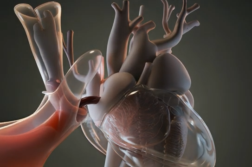
“Our heart has a little appendix, just like appendix in the belly. It’s a little pouch. That’s where blood gets in there, doesn’t move, forms clot and it goes up next time to brain causes stroke,” Dr. Satpathy explains.

The Amulet is a permanent implant that is placed in a patient’s left atrial appendage, LAA, which is a pouch-like part of the heart. It’s like two doors being locked, preventing blood clots from entering the blood stream.

Dr. Sathpathy adds, “This prevents stroke, this reduces or eliminates bleeding because now you’re not on blood thinner, you’re only on baby aspirin.”

It worked for Doug and he’s now feeling stronger every day.

“They ask me how I’m doing, I say, ‘Well, I’m still vertical.’ So, that’s what counts,” Doug says.

The Amulet does not cure AFib. It greatly reduces the risk of stroke and bleeding. Patients will still need to monitor their a-fib after receiving the amulet.

Contributors to this news report include: Marsha Lewis, Producer; Roque Correa, Videographer & Editor.

To receive a free weekly e-mail on medical breakthroughs from Ivanhoe, sign up at: http://www.ivanhoe.com/ftk

Source:

https://www.heart.org/en/health-topics/atrial-fibrillation/what-is-atrial-fibrillation-afib-or-af

MEDICAL BREAKTHROUGHS

RESEARCH SUMMARY

TOPIC:            BACK ON BEAT: AMULET FOR AFib

REPORT:        MB #5173

BACKGROUND: Atrial fibrillation (A-fib) is an irregular heartbeat that is often rapid and can cause blood clotting in the heart. It was reported in 2019 to be responsible for 26,535 deaths. A-fib increases someone risk of stroke, heart failure, and other complications regarding the heart. AFib is very highly associated with another heart related problem called arial flutter. While the conditions are different, the treatments and symptoms are very similar. Problems occurring in the hearts structure are the most common causes of AFib. Things such as coronary artery disease, heart attacks, heart defects at birth, heart valve issues, high blood pressures, and lung diseases are all highly correlated to AFib. Blood clots are a dangerous result of atrial fibrillation that can lead to a stroke.

(Source:

https://www.mayoclinic.org/diseases-conditions/atrial-fibrillation/symptoms-causes/syc-20350624

https://www.cdc.gov/heartdisease/atrial_fibrillation.htm

DIAGNOSING: The risk factors of AFib can include older age, heart disease, high blood pressure, thyroid disease, alcoholism, obesity, and family history. It is diagnosed often through EKGs, blood tests, halter monitors, stress tests, and X-rays. A doctor may order several tests before a diagnosis is made. Many people are unaware they have AFib and are only detected when a doctor is using a stethoscope during a physical examination. AFib is often treated through medications to control the hearts rhythm, blood thinning medicine to prevent blood clots, surgery, and healthy lifestyle changes to food and diet.

(Source:

https://www.mayoclinic.org/diseases-conditions/atrial-fibrillation/diagnosis-treatment/drc-20350630#:~:text=Electrocardiogram%20(ECG%20or%20EKG).&text=Wires%20connect%20the%20electrodes%20to,test%20for%20diagnosing%20atrial%20fibrillation.

https://www.cdc.gov/heartdisease/atrial_fibrillation.htm

https://www.mayoclinic.org/diseases-conditions/atrial-fibrillation/symptoms-causes/syc-20350624

NEW TECHNOLOGY: A new device, the Amulet LAA Occluder, is the first of its kind and is designed to help patients suffering with atrial fibrillation that cannot process blood thinners to prevent stroke. It is a small pouch that connects with the upper chamber on the left side of the heart. This is a region where blood clots can form, and if formed, travel to the brain and cause stroke. The device completed clinical trials and was approved by the Food and Drug Administration.

(Source:

https://pontevedrarecorder.com/stories/baptist-health-first-in-southeast-to-implant-new-afib-treatment-device,16826

FOR MORE INFORMATION ON THIS REPORT, PLEASE CONTACT:

Wesley Roberts

Wesley.roberts@bmcjax.com

If this story or any other Ivanhoe story has impacted your life or prompted you or someone you know to seek or change treatments, please let us know by contacting Marjorie Bekaert Thomas at mthomas@ivanhoe.com

Doctor Q and A

Read the entire Doctor Q&A for Dr. Ruby Satpathy, MD, Interventional Cardiologist

Read the entire Q&A