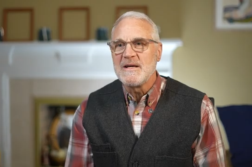
Scott Sagraves, MD, Trauma Surgeon at Baylor Scott & White Health – Temple, talks about the rebirth of a transfusion process that saved a cowboy’s life after being accidentally shot.
Interview conducted by Ivanhoe Broadcast News in August 2022.
Can you talk about what are the most common traumas that you see in your hospital rooms?
SAGRAVES: Here in my clinical duties at Baylor Scott White Medical Center – Temple, we’ve seen a real resurgence in falls. Falls of all kinds. Whether it’s occupational or falling off ladders, primarily we’re seeing far more elderly folks fall for a variety of reasons. This is common throughout the nation as our population is aging. Here in central Texas, we see a lot of retirees falling as our No.1 injury pattern, followed by motor vehicle crashes, followed by some type of violence or penetrating injury.
Regarding that latter piece, are we seeing more gunshot wounds than ever before?
SAGRAVES: Interesting enough, early in the pandemic, we saw a decline as the state shut down and people were at home. However, as the states reopens, we’re seeing a record number of gunshot wounds, stab wounds, and assaults with blunt objects. It has increased now drastically.
How do these traumas, particularly the penetrating traumas, impact the patient?
SAGRAVES: If they survive, many times these are fatal injuries depending on where they’re injured or where they’re shot. If they survive, it’s usually a very long recovery period. Physically, you typically have large surgeries, large incision surgeries, possible organ removal, possible entry into the chest cavity, and placement of chest tubes. They may be on a ventilator for a long time and may be in the ICU. Physically it is an assault on the body. Emotionally, many of these victims suffer from post-traumatic stress disorder and have trouble with reacclimating to a family life, working in the community, and trouble sleeping. Some even turn to intoxicants and stuff like that to ease the pain.
How has the treatment for traumas changed over the years?
SAGRAVES: In broad categories, it has not. If someone is shot, they will need an operation. Surgery is the main treatment. To subcategories of that, we have seen better resuscitation. We have seen the advent of trauma centers, development of EMS systems, and development of air systems. There have been some improvements, but most cases still require surgery.
What are some of the biggest breakthroughs when it comes to treating trauma patients?
SAGRAVES: The largest one for me has been the lessons we’ve learned from our military surgeons. Specifically, how to resuscitate the injured patient better. This includes things like whole blood, which the center has adopted. And we now have whole blood for our injured patients, as well as a balance resuscitation, which includes red blood cells. Blood donations are needed. Plasma and platelets are all very resource-dependent quantities. We have learned that rather than just give salt water, we are giving back blood and coagulation products to help. That, to me, in the last 10 to 20 years is probably the biggest advancement in the management of the injured patient.
How have the outcomes changed in the past five years, and what would you attribute that to?
SAGRAVES: We are seeing more people survive. That is partly due to the trauma center system and better EMS, better trained people. We have seen national benchmarks established. Baylor Scott White Medical Center here in Temple is a part of that national benchmarking. We have seen our numbers excel and we lead the nation in the top decile of outcomes. It is an active system with our people working hard at it. It is a team approach. That holds all the things that start coming in to improving our outcomes.
What do most trauma centers do and what is particularly done here? Can you speak about simulations and preparing for the things that you may not see on an everyday basis?
SAGRAVES: Under the leadership of Dr. Justin Regner, trauma medical director and Dr. Dorian Drigalla, an emergency medicine physician, we have developed the program here of a monthly simulation. And we are blessed to have an extensive simulation system with mannequins that you can do invasive procedures on and put breathing, chest, and IV tubes in. You can even deliver babies. We do these scenarios with the team. Usually at a shift change. This way we get night nurses, day nurses, nighttime call people, and daytime call people practiced. And we work between the teams. The ED nursing, trauma nursing, emergency medicine physicians, and trauma surgery residents all come together and learn. It runs for about 20 minutes to half an hour and follow with a debrief. That’s really the learning process of the simulation. There are some technical aspects of it and practice, but it’s mainly the debrief. What we can do better, communicate better, trust other members of our team and get to that common goal of being prepared when the time comes. We will have seen it and will be ready to respond to it.
What would you consider the biggest advancement when it comes to treating trauma?
SAGRAVES: It is a system approach and system development. We have been leading that in this region. However, you get into stuff like technology, technical advancements, and different types of equipment that have been refined. The use of the resuscitation and the blood products are a key to that. Better medicines. It is a combination of things. It’s not just one thing. But rest assured, here at Temple and Memorial Hospital, we are on the cutting-edge of those advancements and have adopted them and utilized them daily in the care of a traumatized patient.
As a physician, does it provide you hope to see these advancements in this medical field when it comes to treating patients?
SAGRAVES: Absolutely. I’ve been doing trauma and general surgery for over 20 years. With the advancements we’ve seen, and I’ve seen personally in my career, it gives me a lot of hope that the research is continuing, and we will get breakthroughs to find the magic to resuscitate people better. It is continuing to evolve. Some of the lessons we learned from history with plasma, now we’re back doing that after the two wars in Iraq and Afghanistan. It gives me a lot of hope that the research continues and new trainees coming through are learning these advanced techniques.
What was your impression of Mr. Case Jones?
SAGRAVES: A lot is subsequent to when he actually showed up. There was a 20-some-odd-year-old guy who’s been shot. What I have learned about him is he’s a young man, strong in his faith, married to a lovely wife. Who’s a local guy who’s taken over the family business and runs a large ranch in the Gatesville area. Mostly cattle, I believe. And they were out doing things that a lot of Texans do that night. It was, you know, ridding the ranch of these feral pigs. I’ve since become aware of his sense of humor and his faithfulness to his wife and his family. A lot of those things I’ve subsequently learned as he’s recovered, but the night he came in, I knew none of it.
When you first saw him, what were his injuries?
SAGRAVES: on the outside, it didn’t look like much. There was a hole in his abdomen area. Then, there was a hole on his side, about the size of a softball. Those were the external signs of injury that I could see.
What were those injuries?
SAGRAVES: When he came in, he was in shock, and his blood pressure is low. His heart rate was fast, and he was very pale. Dark venous blood was coming out of these holes. I knew he had hit something very important, and he was bleeding. Once we got him started to being resuscitated, we spent about 10 minutes in the emergency department, and then transitioned up to the operating room. We found that his liver was almost split in half by the bullet. He was shot once with a hunting type rifle caliber, military grade bullet. That energy was transferred to his liver, causing a lot of bleeding, both arterial and venous. It then entered and tore up his diaphragm, broke several ribs, punctured his lung and blew out his side. He had very extensive injuries from this one, relatively small bullet.
For the record, can you state he suffered from a gunshot wound?
SAGRAVES: Yes. He was out hunting feral pigs. He and some family members were out hunting them around 3 in the morning. There was an errant shot, and he was hit with a large caliber weapon and sustained a gunshot wound to his abdominal and thoracic cavities.
Can you talk about the treatment that you performed on him?
SAGRAVES: It really started with the EMS folks and his family members out in the field. If they hadn’t gotten him to us, I wouldn’t have had a job to do because he wouldn’t have made it. But he got here. I saw the details of what was going on. I have seen something similar to this over my career and knew we had to get to the operating room. We started resuscitation with blood and plasma and antibiotics down in the emergency department. In the 12 minutes we were out of there and up to the O.R. where he was put to sleep and put on a ventilator by anesthesia. Anesthesia then did what we call lined him up with big resuscitation catheters and continued our resuscitation. This included what we call the massive transfusion policy. This gives the blood bank warning that we have a big resuscitation, and they start pouring a lot of these products to the operating room to the event. Once he was resuscitated or while he was being resuscitated, we made an incision. While opening his abdominal cavity up, we saw the injuries and started working to stem the bleeding, stop the contamination and get the lung injury under control.
Would he have gotten this type of treatment five or 10 years ago?
SAGRAVES: Absolutely. I know five and 10 years is a reasonable time, but that still puts us into – in the 2000s and mid-2000s. Trauma systems have been well developed. If you go back 40 plus years ago, it would have been more challenging. We were just coming out of Vietnam. We were learning some things. But a lot of these lessons in how to treat these things have been developed through the various wars and the civilian urban times where gunshot wounds have been prevalent. So, five or 10 years, I think he would have gotten the same thing. Maybe not as good of a resuscitation as we’re capable of today, but he would have got pretty much the same surgery, or at least the attempts at it.
Have you seen him since? And if you have, what goes through your body every time you see him?
SAGRAVES: Yes, I have seen him multiple times. I got to know his wife, Kristin, very well during his time in the ICU and up on the floor here at Memorial. And we had a bond. I gave her my cell phone number. Because I knew, young wife, devastating injury – she was going to have to start taking care of him. So, I’ve seen him four, five, six clinic visits. And in late May or early June, we discharged him from our care because he’s recovered. But every time I see him, I remember that night. I remember getting woken up from a dead sleep. And when I see him, there’s a couple of things. I’m grateful that the system was in place to save this young man. I’m hopeful that he will l continue and have a very robust, productive, normal life. I’m excited for his wife as they start planning a family and I’m genuinely just pleased to see this young family. They are really what makes this community what it is. They’re Texans true and true. And I think I’m just so pleased that I could be a small part of his care.
Does this make you hopeful for the future?
SAGRAVES: The pandemic has been rough. But the system we have in place, the teams that we have in place, just show that it works. So, I don’t know if hope is the right word. I am an optimistic person to begin with. I am glad to be a part of this organization and I am hopeful for them, let’s say that. For me it is going about my job, being here, and using the tools we’ve set up and hopefully be ready to take on the next one when they show up.
Dr. Sagraves, is there anything I missed that you want to discuss?
SAGRAVES: It takes a village. And I cannot stress that enough because if his family members hadn’t slowed down the blood or gotten the ambulance to come; if the ambulance had a flat tire or couldn’t get him here; if we were delayed in the ED or didn’t have the proper measures ready; if the O.R. wasn’t ready; nursing involved in both trauma nursing and nursing; his long recovery in the ICU; the interventional radiologist who helped put in some drains for us; the physical and occupational therapy; and then most of all, you know, floor nursing. Then it’s family. Kristin, his wife, never left the bedside. When I first talked with them that first night, I thought the whole town of Gatesville was here. There was 50 people here. It takes a village. Medically, I am a small part of that. I am glad to be that part. It was an important part. But without these folks, without this village, he would not be where he is today. I cannot. I really want to emphasize that to you, that wasn’t just me. It was not me alone. Yes, I played a good part in it, but without all these folks, without them getting him here, without the recovery, without a wife that’s been so strong, so supportive, he wouldn’t be where he is today. It really takes a village.
How important is that type of infrastructure when it comes to saving lives? How important is that from community all the way up to care?
SAGRAVES: Without getting too technical, we have those things in place and, unfortunately, we’ve seen our share of disasters. Whether that be hurricanes, tornadoes, or a mass shooting. Texas has had several. This facility has had several – have been a part of several. That preplanning, that regional advisory council, that EMS development, the behind the things – behind the scenes of our task forces that stockpile equipment and have stuff in trailers ready to go and can respond with multiple ambulances. Our fire departments and our police departments. All are going to rush to the scene to get there. That follows with communication. If there is 50 people, can you handle it? Usually, we can. If we can’t, where is our next level two center? Is that up in Waco? Is it over with the level three center at the Army base? We work together to take care of those people. I cannot stress enough development, preparation, both at your homes and supporting the medical complexes that we have in place. And to – don’t forget to do things like give blood and have your own disaster plan at your own house. Have the water, have the medicines, have the ability to take care of your pets. Because we saw in last February with the snow, a lot of people were left without power and without water. And it’s a challenge. Be prepared is the answer.
END OF INTERVIEW
This information is intended for additional research purposes only. It is not to be used as a prescription or advice from Ivanhoe Broadcast News, Inc. or any medical professional interviewed. Ivanhoe Broadcast News, Inc. assumes no responsibility for the depth or accuracy of physician statements. Procedures or medicines apply to different people and medical factors; always consult your physician on medical matters.
If you would like more information, please contact:
Deke Jones
Sign up for a free weekly e-mail on Medical Breakthroughs called First to Know by clicking here