STANFORD, Calif. (Ivanhoe Newswire) — Most parents with young children will tell you that they’ll do anything for them, especially when they’re not feeling well. However, with a serious hospitalization, the stress and anxiety can be overwhelming. That’s why one hospital has recently come up with an innovative way to ease the parents’ worry. Caregivers
The sights and sounds of five-year-old Leo Elbanna’s ICU room have become very familiar to his dad, Daniel.
“We got the diagnosis that he had Wilms tumor, it’s a cancer that comes from the kidney,” he said.
It’s been a battle. His latest stay at Stanford Medicine Children’s Health has lasted over a month so far.
“It’s so stressful,” Daniel told Ivanhoe.
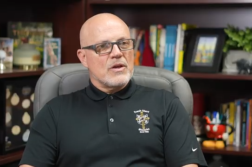
Thomas Caruso, MD, co-director of the Stanford Medicine Chariot program at Stanford Medicine Children’s Health, noticed. He leads the Chariot program, which develops technologies to ease anxiety and pain in patients as they deal with their illness.
“We believe in treating the whole patient, which includes not just themselves but also the parents,” Dr. Caruso explained.
“One of the nurses came back and said, ‘Hey, how do you … we got the VR. Do you want to use it?’” recalled Daniel.
He’s referring to a virtual reality guided meditation designed to give families an escape from the stress of caring for a sick child.
“Although they do not want to leave their child’s bedside, we can give them five to 10 minutes of a virtual field trip someplace that’s way more calm and relaxing,” said Dr. Caruso.
“You’re hearing the birds and seeing the waterfall and the stars, and then at some point the aurora borealis kind of starts happening. It really felt like I was immersed into it,” explained Daniel.
A recently published Stanford Medicine study found that VR-guided meditation reduced parents’ anxiety by 30%.
“We know that if a parent is in a really good space mentally and emotionally and psychologically, they’re best suited to help us care for their child,” Dr. Caruso told Ivanhoe.
“Anything you can do to recharge your battery a little bit is vitally important for his well-being,” said Daniel.
Stanford Medicine Children’s Health is so encouraged by the benefits of the VR headset for parents and healthcare members that they’re making the technology available for free to other hospitals to use across the country. If interested, contact the Chariot program at https://chariot.stanford.edu/.
Contributors to this news report include: Jennifer Winter, Producer; Rusty Reed, Videographer; & Chuck Bennethum, Editor.
Source:
https://pubmed.ncbi.nlm.nih.gov/37840456/
* For More Information, Contact:
Stanford Medicine Children’s Health Media
Free weekly e-mail on Prescription: Health from Ivanhoe. To sign up: http://www.ivanhoe.com/ftk