CINCINNATI, Ohio. (Ivanhoe Newswire) — Rare diseases are individually uncommon, but collectively impact about one in 10 Americans, an estimated 25-30 million people, and roughly 300 million worldwide. For many families, the right diagnosis can take years. But one family refused to give up and their persistence paid off.
Rod Fussinger and his granddaughter Eveyln spend time together by carefully piecing together puzzles, just like doctors finally pieced together the mystery of why Rod’s health took a sudden turn for the worse.
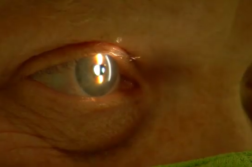
“In my right eye, all I had was a blob right in the center of vision,” he recalled.
Several surgeries followed. First, a torn retina, cataracts and double vision — and then new symptoms occurred.
“I started getting muscle twitches. I just thought, that is really strange,” Rod told Ivanhoe.
Claire, his wife of 53 years, had to watch Rod start to slip away.
“He started with a head droop. He was hallucinating. He was delusional. He was confused. He wasn’t eating, he wasn’t sleeping. It was horrid,” she said.
“Claire would take me to doctor appointments and I slept through the entire appointment. Didn’t even know I was there,” explained Rod.
Misdiagnosed with Parkinson’s and MSA, a second and third opinion led them to a new team at UC Health.
“We were really worried about him,” recalled Joseph LaPorta, DO, neuroimmunologist at University of Cincinnati Health.
On his 74th birthday, Rod got a diagnosis.
“It is called Anti-IgLON5 Associated Autoimmune Encephalitis. The immune system mounts a very large response, and then it goes haywire and it starts to attack the brain,” explained Dr. LaPorta.
Rod started on immune-suppressing therapy, then moved to plasmapheresis.
“We’re effectively taking out his blood. We are filtering out the bad plasma and antibodies, giving him healthy antibodies, and then returning the blood to his body. And it’s really been miraculous for Rod,” said Dr. LaPorta.
Rod’s body responded.
“They’ve thought I would never walk again and I’m walking,” he exclaimed.
“It’s a miracle that he’s as good as he is right now,” said Claire.
Walking, sleeping, and back to spending moments that matter.
Rod still receives plasmapheresis every two weeks and regular follow-ups to keep Anti-IgLON5 in check. But doctors say as of today, he is in full remission. But Rod’s story is a reminder for families facing a rare disease, answers can take years, and research dollars often lag because each condition affects so few people. Specialists say persistence and second opinions can save lives.
Contributors to this news report include: Marsha Lewis, Producer; Matt Goldschmidt, Videographer; Roque Correa, Editor.
Source:
https://slc6a1connect.org/2025/02/27/understanding-rare-diseases-beyond-the-numbers/
* For More Information, Contact: University of Cincinnati Gardner Neuroscience Institute
(513) 475-8000
Free weekly e-mail on Prescription: Health from Ivanhoe. To sign up: http://www.ivanhoe.com/ftk