NASHVILLE, Tenn. (Ivanhoe Newswire) — Kidney cancer is one of the fastest-growing cancers in the U.S., and until recently, a diagnosis of advanced disease often meant just a few years to live. Now, new immunotherapy combinations are helping many patients live 10-15 years longer than ever before.
Bob Kinkead has always played the numbers — first as a talent manager counting hit songs and now, counting the years he’s living with advanced kidney cancer.
“I went through a couple years of really just severe pain. I thought it was golf, really,” he recalled.
Then a fall sent him to the ER. There, an MRI revealed Stage 4 Kidney Cancer.
“And within like the next day it was, you probably need to get your affairs in order, and that’s when it really hit home,” said Bob.
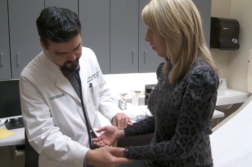
Brian Rini, MD, Professor at Vanderbilt Cancer Center at Vanderbilt University Medical Center, put Bob on a two-drug combination. First: an infusion of pembrolizumab.
“It stimulates their immune system to fight the cancer. So that’s its mechanism of action,” explained Dr. Rini.
Then that is followed up with pills called axitinib.
“They choke off the blood supply to the tumor. So they’re not attacking the tumor itself, per se, they’re attacking its blood supply,” Dr. Rini told Ivanhoe.
The first long-term study of its kind showed the combination helped patients live longer and stay progression-free longer than the old standard of care.
“More patients had tumors shrink, they had disease control for a longer time,” said Dr. Rini.
For Bob, that means more time to do what he loves, finding new award-winning talent and also chasing a new number.
“That first year when I was able to walk, I started swinging a golf club. And then that second year I actually won a golf tournament. So, today I’m getting close to single digits again,” he told Ivanhoe.
Getting a single-digit handicap and living life to its fullest!
This regimen is part of a new wave of “doublet” immunotherapy combinations. Five are now FDA-approved with long-term data from many trials showing patients living years longer than ever before. Researchers say the next step is personalized care: using biomarkers to match each patient’s tumor to the best treatment. It’s not here yet, but these results bring doctors closer to that goal.
Contributors to this news report include: Marsha Lewis, Producer; Matt Goldschmidt, Videographer; Chuck Bennethum, Editor.
* For More Information, Contact: Criag Boerner
Assistant Director, Media Director, & National News Director at Vanderbilt University Medical Center
(615) 322-4747
Or call (216) 536-3208
Free weekly e-mail on Prescription: Health from Ivanhoe. To sign up: http://www.ivanhoe.com/ftk